
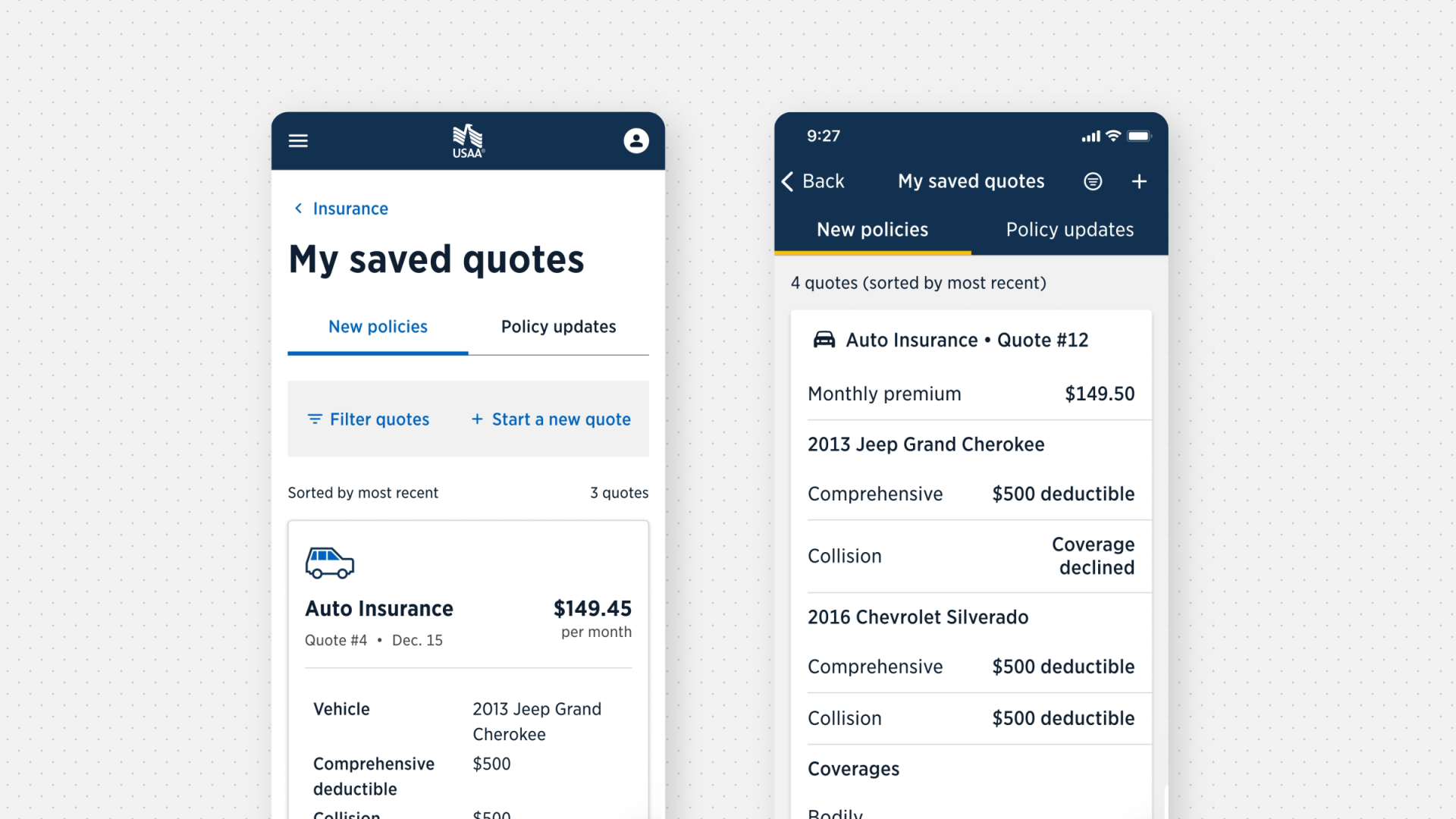
USAA Saved Quotes Hub
Helping millions of members find and manage their insurance quotes without calling support.
PROJECT SNAPSHOT
Platform
Web + Native Apps
Solution
Designed a centralized self-service quote hub consolidating nine fragmented saved quote experiences.
Impact
~100K support interactions shifted to self-service annually
~1.4M minutes of support time eliminated
~$4.7M operational cost reduction per year
Role
Lead Designer
Team
Coordinated with rotating PMs, engineering partners, and insurance product teams. With research plan approval and design critique support.
Problem
Members struggled to find saved insurance quotes digitally, often calling support multiple times to retrieve and purchase them.
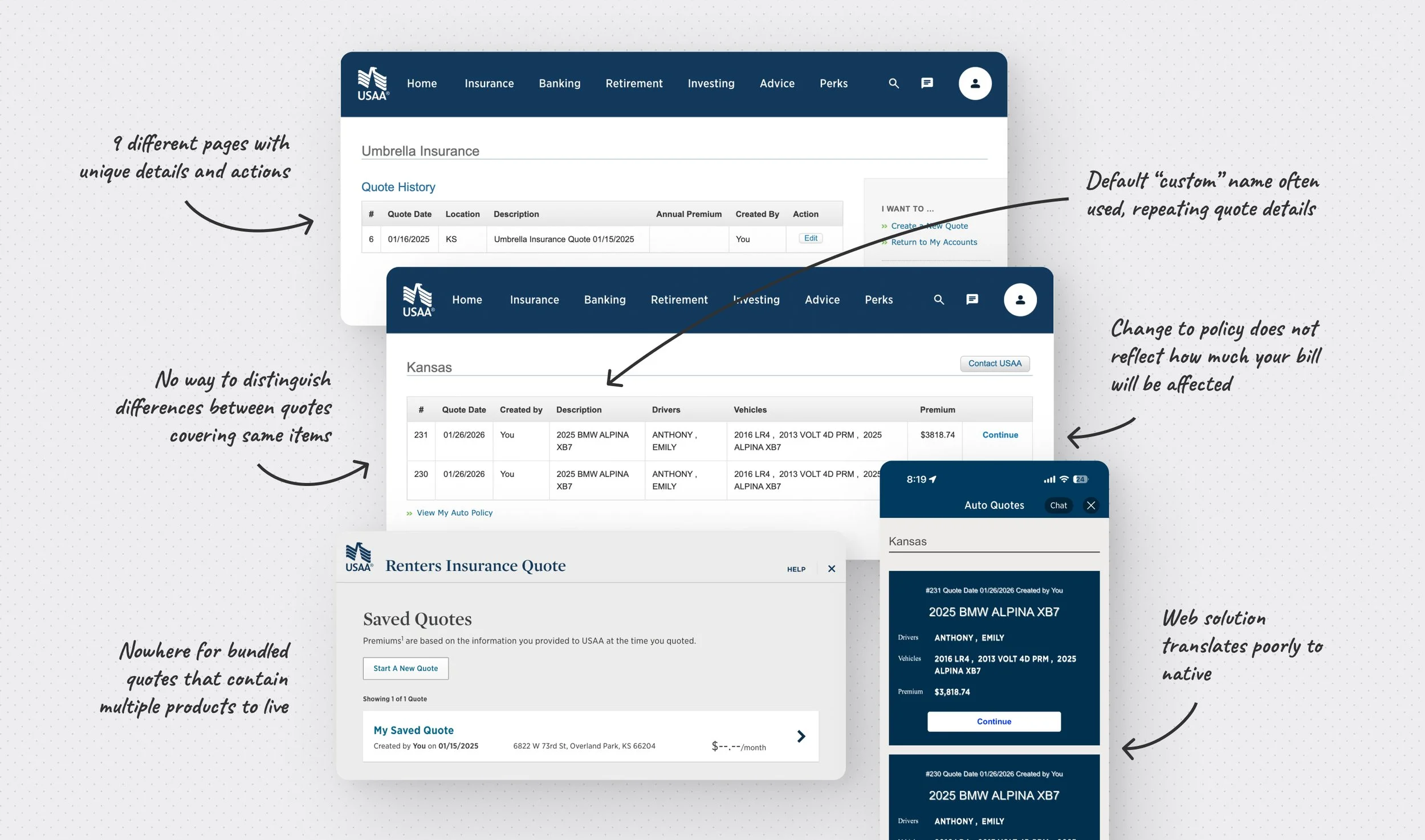
The Problem
USAA members often needed to call support multiple times to retrieve or complete their insurance quotes. In many cases quotes were difficult to locate digitally, leading members to contact support 2-4 times on average before completing a purchase. This created significant friction for members while also increasing operational costs for USAA. Improving the self-service quote retrieval experience presented an opportunity to both simplify the user journey and reduce millions of dollars in support calls.
Understanding the Opportunity
The existing digital experience spread saved quotes across nine separate product-specific pages, each built with outdated design patterns and inconsistent information structures. Members often had difficulty distinguishing between quotes and were forced to rely on memory or manually open each quote to understand differences. Voice-of-the-customer feedback and support call data confirmed that this fragmented experience created confusion and unnecessary effort.
Because analytics for the existing quote experiences were limited, I relied on heuristic evaluations and customer feedback to identify opportunities for improvement. I hypothesized that a centralized hub for all product quotes would significantly reduce the effort required to locate and manage quotes. It would also align with the future aim to support quotes that contained multiple products (bundles), and reduce ongoing maintenance costs for the current separate quote locations. I defined a vision for a product-agnostic quote framework capable of scaling across different insurance products, quote statuses, and levels of detail while presenting the most relevant information to users.
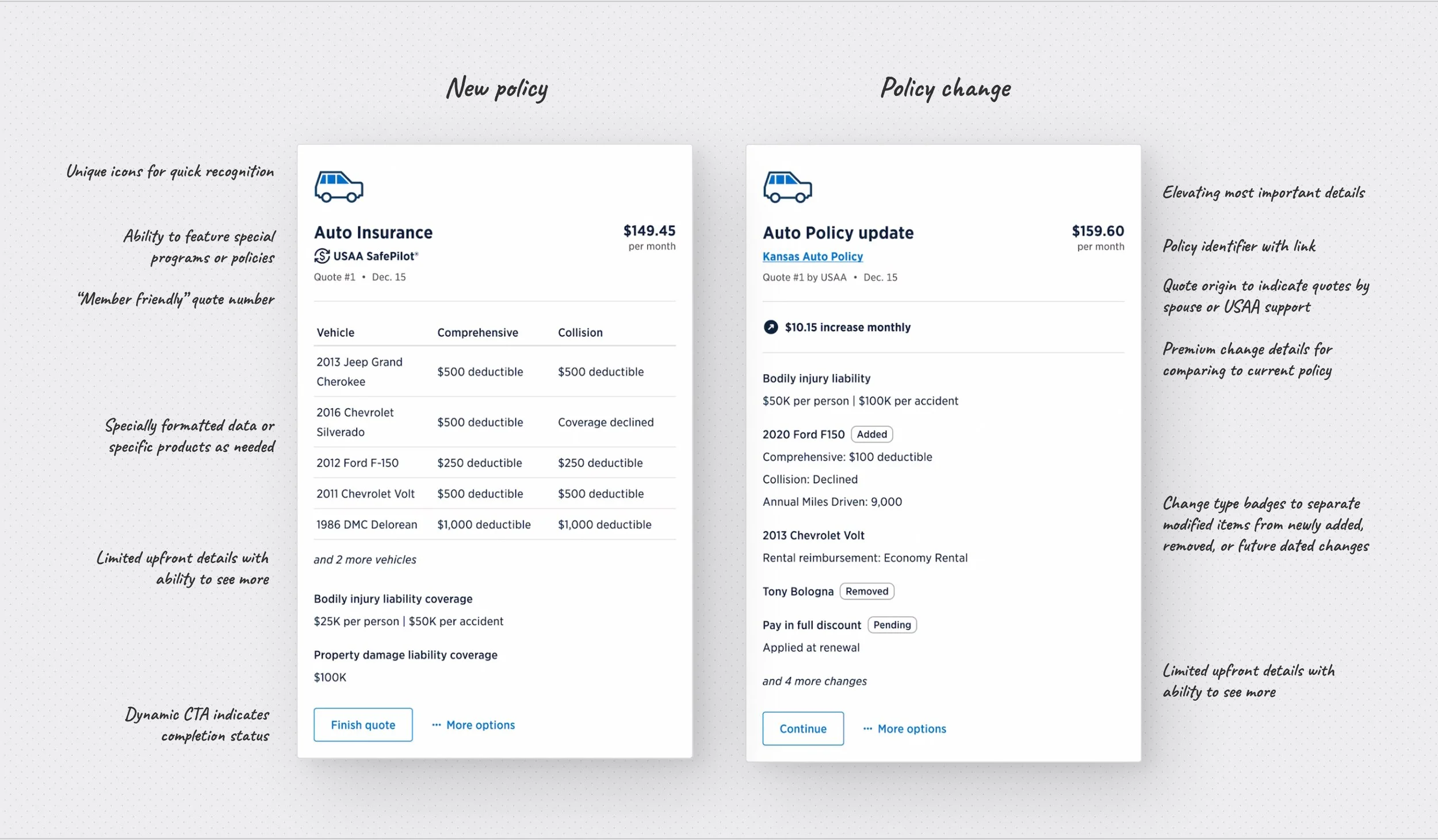
Designing a Scalable Framework
The original scope was limited to the USAA website, with a native app experience to come later. I worked with 5 different product teams and dove deep into the actual quote building experience for each product to understand what was unique and where they overlapped. I also spent time with experts in our backend policy-building and saving system to understand the various stages of completion a quote might be saved in.
I started with the least amount of details possible for each product, only growing the detail set to ensure compatibility for scenarios where users would need more info like special policies or unique timing. Throughout the project, product teams often pushed to display as much information as possible. I advocated for a streamlined approach that avoided cognitive overload, reinforcing the decision with usability testing results that demonstrated stronger comprehension and task completion with a simpler interface.
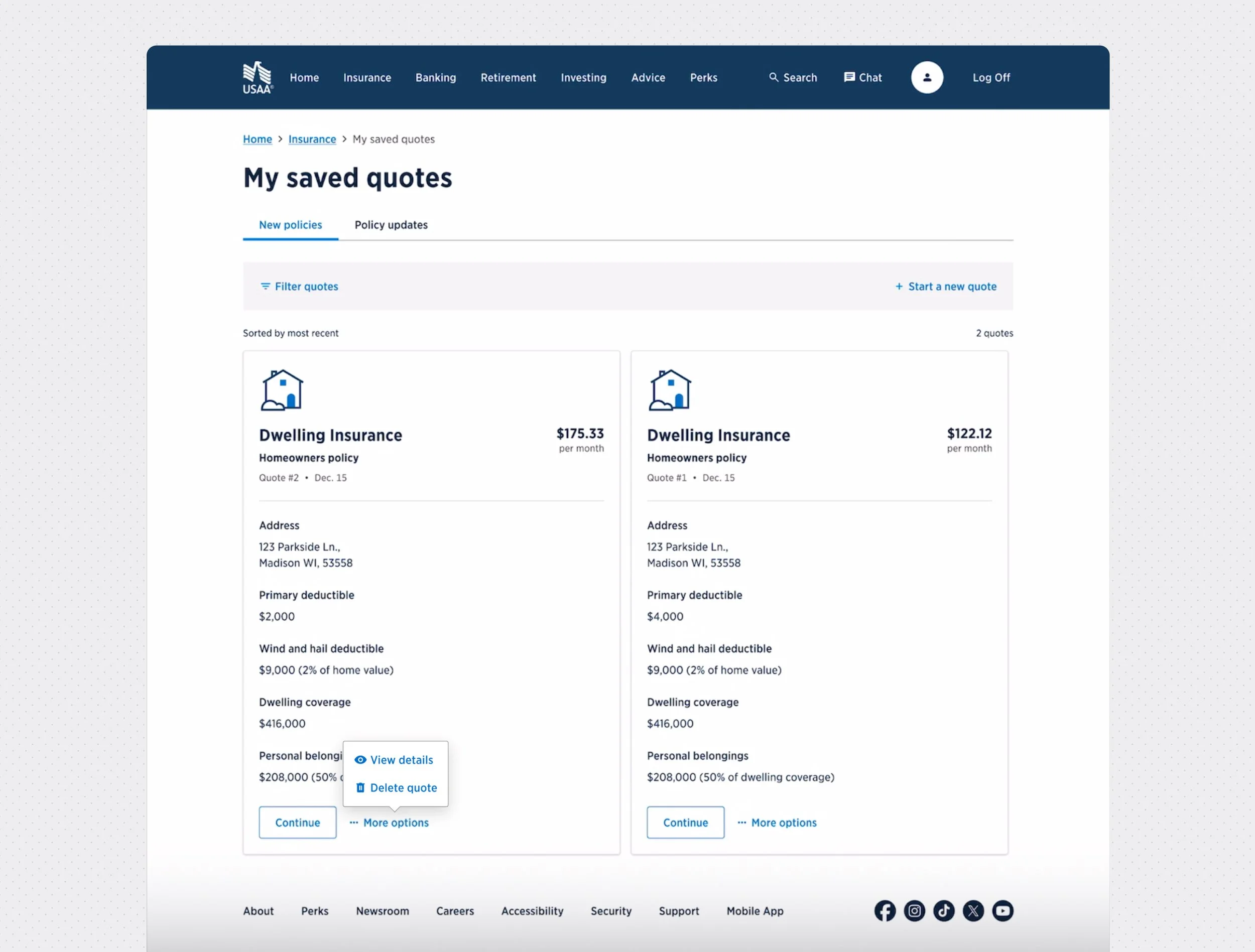
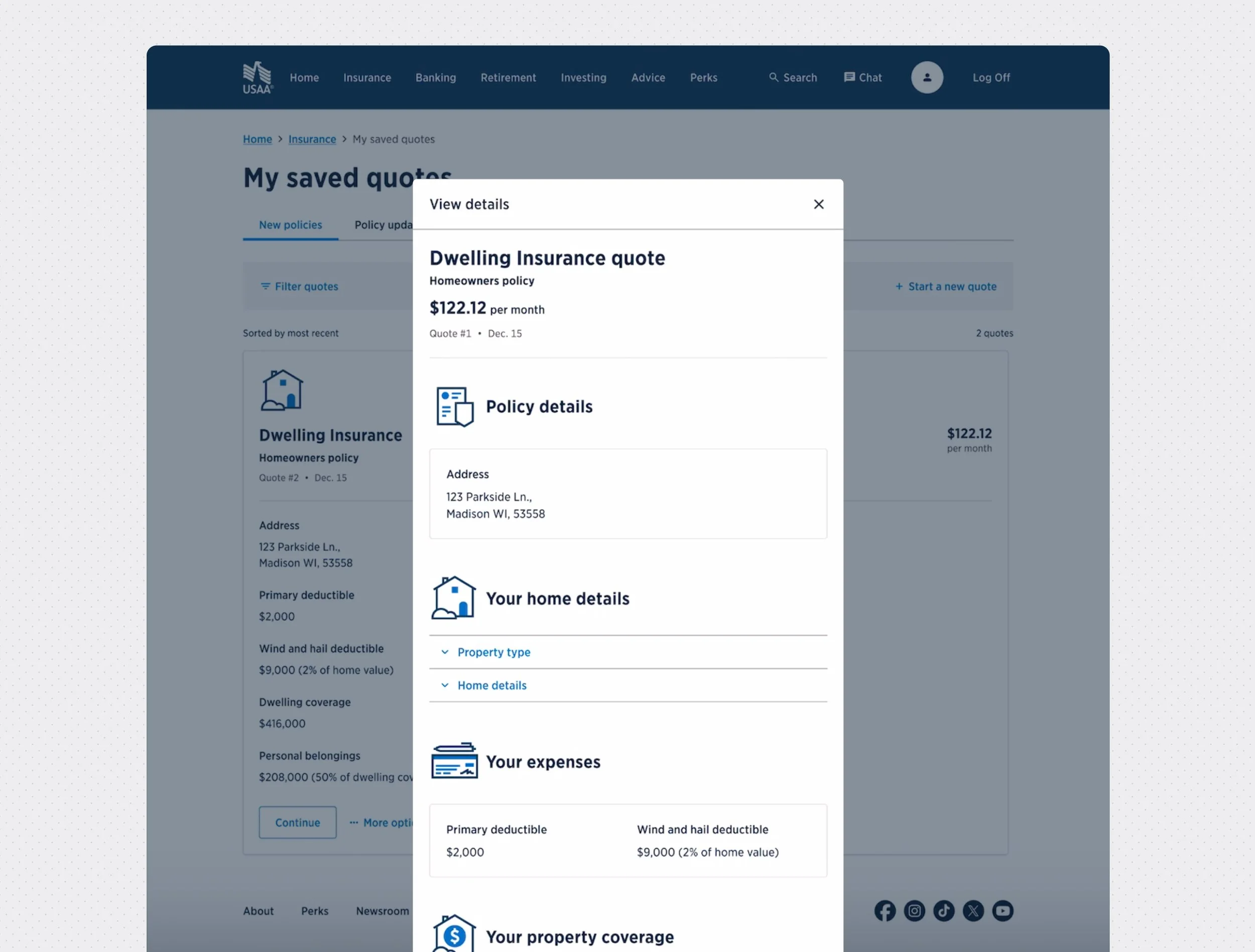
Based on member feedback we knew comparison features were desirable, but we did not have capacity to build a full fledged tool for that any time soon. To bring the most value out of our MVP I pushed for displaying relevant details up front to enable side-by-side compare-ability. Insurance products contain a large number of configurable options, so we used survey data and policy data to determine which information was most important for users when reviewing saved quotes. We also used policy data to define limits and prevent information overload, i.e. 95% of auto policies have less than 5 vehicles so we prioritized showing no more than that many vehicles in the default view. By leading with quote details we also eliminated the need for custom quote names, a feature that was rarely if ever used. If members wanted more details, we added the option to open an expanded details view without entering the quote flow, enabling deeper dives while staying in context of the hub.
We needed this framework to display quotes for entirely new policies (acquisition), as well as current policy holders that were quoting changes (servicing). Even if the products were the same, these transactions had entirely different rules we needed to support. Despite their backend differences, we aimed for consistency on the front end for our users.